In January of 2013 I started a journey that would take me the course of a year to complete. I set 40 goals to accomplish before my 40th birthday, which is today. Before I go through the list and tally my successes and failures, I have to reflect on the entire process.
For the original list and more info about each item, go to WoosleyCoaching.com/40
Overall, it was an amazing year. I accomplished so much in my personal and professional life, and I have to believe that this challenge played a positive role in my achievements. By tapping into my desires and intentions, writing down specific goals, publishing them, and doing monthly updates, I was forced to follow through on internal initiatives like never before. It’s easy to follow through for someone else (a boss, a spouse, a kid, etc.). But for me, the things I wanted for myself (even if they involved and benefited others) was more difficult.
The challenge is by far a success and something I recommend anyone attempt at least once in their lives (though every year may be pushing it). But there were failures along the way as you’ll see in a moment. So what would I change?
First off, I wouldn’t do it as a 40 Before 40, but a 40 At 40 list. Turning 40 can be an emotional challenge (it was for me at times, as silly as it seems). The list ended up prolonging my “issues” about the age change and put pressure on the entire birthday thing for an entire year. I may have been better off ignoring my age and pretending it wasn’t going to happen until the last month or so. Still, having birthdays is way better than not having them, so I’m not complaining! Doing 40 At 40 would have been more positive, showing what I am capable of even in my old age (I’m joking, really!).
Secondly, I would have focused more on the family items on the list. It was a good year, but I fell short on a few dates and events and that disappoints me the most. However, even though I didn’t check everything off, I was more focused on my family and spending time with them, so the net effect is positive.
Lastly, I would have put more energy into the list at the beginning. I started it later in January, and didn’t accomplish much in the first few months. And some of the long term items, like two million steps, could have used a bit more attention when I had a lot of time to build up a reserve instead of overcoming a deficit at the end. I am a procrastinator by nature in most areas of my life. This was a good exercise in being proactive, but I didn’t do it perfectly.
Now, on to the results, based on the original list order:
Family and Social
1) Daddy/Daughter Getaway
 |
Plan: My daughter Anna and I started taking an annual weekend trip a few summers ago…I really look forward to this and I know she does too! This year we may end up surfing in Cocoa Beach if she gets her wish. |
Actual: Plans for Cocoa Beach and Atlanta didn’t work out, but we had a fantastic Daddy-Daughter date night on November 15th. I’m hopeful we can make a big weekend trip for 2014, along with many date nights! |
2) Father/Son Event
|
Plan: I want to start a similar tradition with my son, Ian. Going to a monster truck rally may suffice…boys are easier in that regard! |
Actual: On July 5th, Ian and I took in the new Man of Steel movie, followed by sushi with Pop Rocks (surprisingly good!). A few weeks later we also made a guys only trip from Alabama to Missouri for my grandfather’s 80th birthday. Good times! |
3) Teach Ian to ride a bike
|
Plan: The biking bug bit me hard last year and I have some big events planned for 2013 (see below). But one of the biggies is getting my son on his bike. He’s frozen with fear, but I know he’ll love it once he figures it out. |
Actual: I honestly don’t know how it happened considering the numerous attempts and meltdowns through the years. But on September 8th, Ian finally did it! Once. Just that once. And then to my surprise and one little push, in December he did it again. He stopped. Restarted himself…and now he can truly ride his bike! |
4) Get gloves and play catch with Anna and Ian
|
Plan: I grew up playing baseball, and loved playing catch with my brother and sister, neighborhood kids, my father and even my mom! This will get us outside, active and together. |
Actual: We went to the sports supply store one day and got gloves and tennis balls. We played a little catch at the park, and that was about it. But later we did use the tennis balls for a few rounds of driveway tennis. It’s a start and I’ll call it a win. |
5) Host a party
 |
Plan: I’m a bit of an introvert so I have no idea how this will manifest itself, but I’m up to the challenge. |
Actual: Well, it didn’t manifest. I was hoping to have a big birthday blowout, but birthdays on Wednesdays just after the holidays aren’t easy to pull off. My fault for not being more proactive. I definitely want to host some smaller dinner parties soon. Who wants to come over? |
6) Have a getaway weekend with Heather
 |
Plan: Heather is my wife of 16+ years. She is an amazing mother, and probably 10 times better than me at parenting. But she deserves a break and we need to have an escape together. It’ll be good for our marriage, which is good for the kids (even if they don’t want us to go!). |
Actual: We celebrated our 17th anniversary in September, but scheduled just didn’t allow for a getaway then. Before we knew it, the year was over. However, we are going away very, very soon…just didn’t meet the birthday deadline. I’ll call it a draw! |
7) Start recycling
|
Plan: I’m amazed at how much trash we generate. Time to be smarter here and get the kids involved…I made some coin with cans in my youth! |
Actual: I set up three bins in the garage for collecting plastic, cans, and newspaper. The kids were on the ball at first, and even helped a bit throughout the year. But dad did most of the bagging and separating. Now there are ten or so bags in the garage waiting to be turned in. So we started and are still doing it, but I can’t quite call it a win. |
8) Have a family service project
|
Plan: This could get partially combined with the recycling efforts. I want us to pick a cause and do something to support it on a sustained basis instead of a one time deal. |
Actual: Total and utter failure. Call it busyness and lack of focus. It happens. But I still want to do this in the coming year. We are so blessed and I want my kids to see that and experience the joy of giving. |
9) Visit a museum or attend a symphony/play/opera
|
Plan: A little culture for the uncultured. |
Actual: Alice Cooper wasn’t what I had in mind when I wrote this goal, but it sure was a good show on November 1st! And it was Anna’s first rock concert, so double win that it wasn’t some freaky screamo band, but a living legend and one of Heather’s favorites. Dad wins this one! |
10) Family Vacation
|
Plan: Normally this consists of visiting family, which is nice. But Disney’s been on the short list for several years. Maybe we won’t visit the mouse, but we need to do something and enjoy ourselves together. |
Actual: Time and finances caught up with this one, so it turned into a big family trip to see family for Thanksgiving. But considering the distance and the great time we had, I say it counts! The mouse can wait a while. |
11) Read the entire Bible
|
Plan: I’ve read through it completely twice since I became a Christian 10 years ago. But I’ve been inconsistent the last few years and need to sharpen my faith. |
Actual: I was tracking my progress every month during my updates. I started strong, then hit the Psalms and slowed down. I think I read about 100 pages of my 1339 page Bible in the last five days of the year, but I finished the Book of Revelations while fireworks lit up the neighborhood. |
12) 12 Dates with My Wife
|
Plan: As much as the weekend getaway is important, regular date nights are probably more important. The kids aren’t quite old enough to leave at home alone yet, and this is something we’ve failed to do enough of. |
Actual: Ten out of twelve isn’t bad, especially considering our track record over the last few years. Still, I can’t call this one a win and will need to put more effort into it for the future (which is already looking better!). |
13) Visit Congress or AL Legislature
|
Plan: Partly because I’m a political junkie with dreams (nightmares?) of the White House, but also because I’m actually involved in the legislative process now as a school board member in my hometown. I’m not Mr. Smith, but it’s important to be involved in the process. |
Actual: My January 2013 trip to Congress didn’t work out, but on April 24th I visited the Alabama Legislature and was recognized on the floor of the House. Very cool, and a big win! |
Business and Personal Development
14) Publish first book
|
Plan: I started my book in 2010, but it’s been derailed a few times…mostly because I want it to be good enough to be proud of instead of just popping it out. This is the year! The last 10% is the hardest part, but that’s all that’s left. |
Actual: It was the year, and probably the biggest single accomplishment of the year. Conquer the Entrepreneur’s Kryptonite was published on June 14th, has sold hundreds of copies with thousands given away, and is still getting rave reviews from readers. I should have a special green check for this one! |
15) Produce 10 products (ebooks, audio programs, etc.)
|
Plan: While the book may be the big one for the year, I also want to produce a lot more content. Some will be free, so be sure to sign up for my newsletter! |
Actual: It’s hard to call this one a failure, but by the numbers it is. Still, the book was published, the Kindle edition was published, and the audiobook was published (Amazon, iTunes, and Audible). My coaching group program is almost complete, and I have several ebooks in the works for this year. I feel good on this one, even with the red X |
16) Conduct group coaching course
|
Plan: I’ve taught a lot of people through the years, especially at Free Agent Academy. But I want group coaching to be a strong focus for the year and a cornerstone of my business. |
Actual: I started then Conquer 2014 coaching group on November 14th with 12 members. We had a lot of calls and messages, and those who stuck with it now have solid plans for their businesses in 2014. I’m so excited for them, and can’t wait to share this program with the world in the coming days and weeks. It is going to help a lot of people! |
17) Conduct first STRATOP
|
Plan: Last year I was certified in the most amazing strategic planning process I’ve ever seen. It’s amazing to see it in process. This year, I’m looking for businesses and organizations in need of a strategic plan. Marketing will be the key. |
Actual: I had to make a substitution, but it was a great one! I spent two days with my friend and client Teri Miller in November. After 20 plus intense hours, we built a plan for her Mommy Sabbatical business for 2014 and beyond. She’s on fire and I can’t wait to see what she does! As for STRATOP, I still need to nail down my marketing approach, but it’s a great program and I’m looking forward to doing more with it. |
18) Finish office
|
Plan: There’s a great shed in my backyard. It’s got power and walls, but needs paint and flooring. Time to get it finished and move in! |
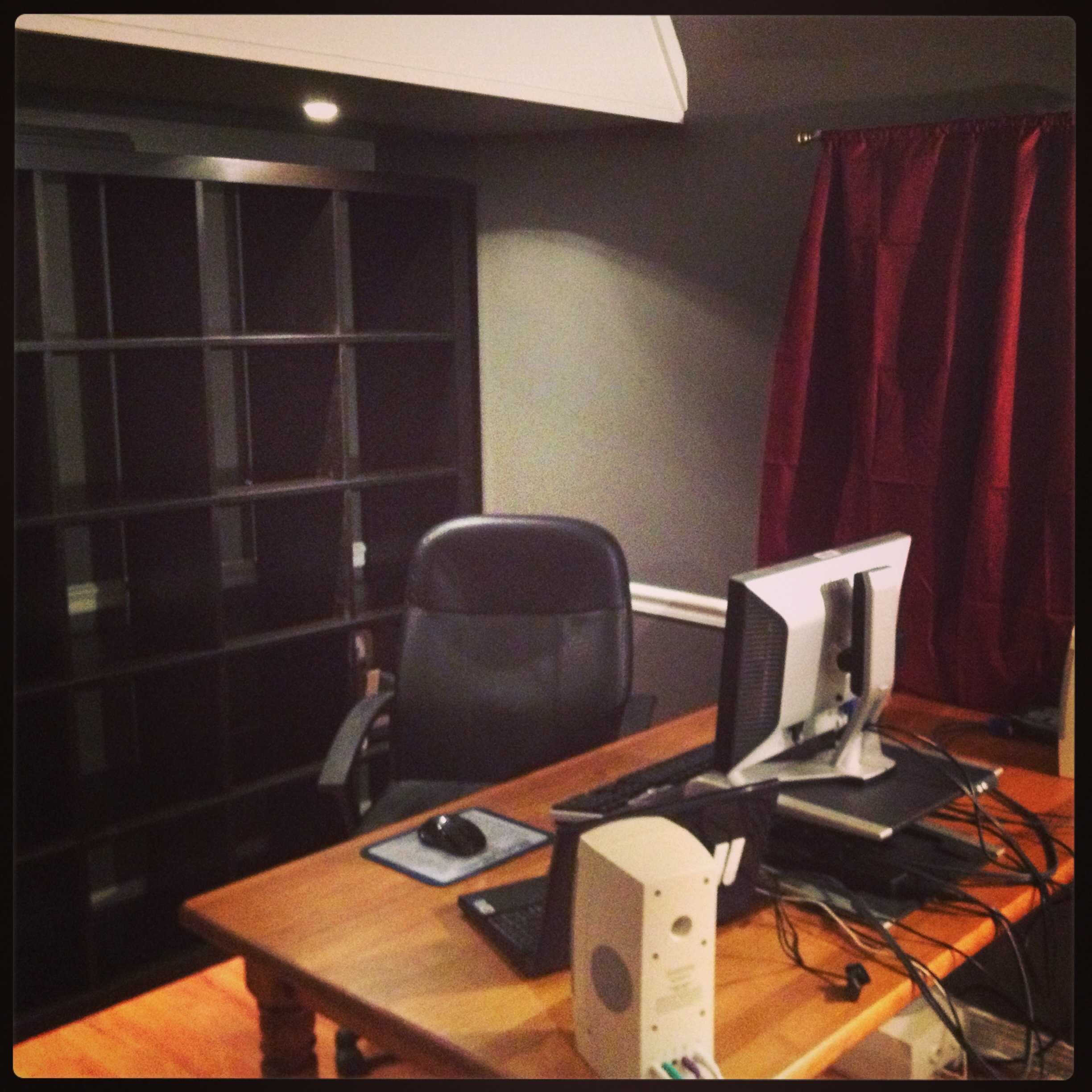
Actual: Although I finished the office in May and was able to move in and work, there are still constant needs and desires in here (I’m here right now). But I have a sanctuary of my own where I can work in peace and quiet. Total win! I’ll be writing the entire story with lots of pictures soon. |
19) Establish LLC
|
Plan: In order to take my business to the next level, I need to make it more official. But this will require the proper revenue to make it worthwhile. So is this really a revenue goal? |
Actual: While this was my plan, I actually punted on it. Working as a Sole Proprietor is still the best structure for what I’m doing, and there were no real advantages to creating an LLC so I didn’t do it yet. One day, and hopefully sooner rather than later that will change. Because it was the right thing to do, I’ll call it a draw instead of a failure. |
20) Start a podcast
|
Plan: Similar to the products goal above, it’s important to get my voice out there. People have to get to know me to understand the value I have to offer. This will go a long way in doing that. |
Actual: The Conquer Your Kryptonite podcast isn’t live yet, but pre-production meetings have been going on for the last month or so. My producer is Bret Farmer, and we even recorded a first show but decided to tweak the format before doing additional recordings. Hopefully the first episode will launch this month. Since the goal says “start”, I call it a win! |
21) Consistently wake up between 5-6 am
|
Plan: My friend Andy Traub just launched a great book called Early to Rise. I’m a night owl, but this will be a positive transformation if I can pull it off! |
Actual: I’m still a night owl. Total fail. And I’m okay with that for now. |
22) Teach a community class (other than FPU)
|
Plan: I’m getting ready to start my 17th FPU class…time to do something new. And there are so many ideas in my head. |
Actual: It wasn’t what I intended to do, but the opportunity to speak at a local organization on October 18th will have to serve as a substitution here. I am lining up my own CYK courses soon, but this went so well and was so well received I say it counts. |
23) Join/Start Local Mastermind/Networking Group
|
Plan: I have incredible connections all over the internet, but surprisingly few locally. It’s a weakness created from being an introverted road warrior who has spent more than half of the last 10 years traveling. I have one strong possibility with a local friend to be named later. If that doesn’t work out, I start my own! |
Actual: Discussions with a friend never made this one materialize. But I did have an awesome weekend in Charlotte masterminding and coaching with my friends Steve and Jody Berkey and Mark Burch. I still want to do a local group on a regular basis, but the quality of the time and continuing connection from this meet up allows me to call the goal a draw. |
24) Make 100 blog posts
|
Plan: I have to be producing on the blog, and the posts have to be more than what they have been. Starting now. |
Actual: This post makes 40 for the year. Sad, but maybe blogging regularly just isn’t my thing. I like to write when an idea hits me, then share it with the world right away. That’s not realistic though, and if I’m going to go pro I need to be pro. Schedules, themes, and building a bank of articles is on the table for the future. Blogs need to have a consistency about them to be successful. Fail, but lessons learned in the attempt (and I wrote some really good stuff when I did post!). |
Fitness and Adventure
25) Ride a Century (100 mile single bike event)
|
Plan: Last year I participated in two organized bike rides. One was 45 miles and the other was 30. My eyes are set on the JDRF Nashville Ride this September for my first century. But with some other rides in mind (Bike MS North Alabama, Hotter’N Hell 100, Hot 100) and lots of practice, I may do it more than once! |
Actual: It was quite a feeling raising my bike over my head in Nashville on September 21st. I completed 103 miles in the JDRF Ride for a Cure…wow. Full details are here. |
26) Complete first 5K race
|
Plan: I don’t like running. But it’s probably good for me. And the Gator Fest 5K supports my school system, so I’ll be sweating it out on March 9th. |
Actual: Totally killed this one with a personal record for a 5K of 33:36. I’m not fast, but I did it! |
27) Drive a race car
|
Plan: Thanks to LivingSocial, this one is bought and paid for. And I get to do it with my wife…I mean she gets to drive a race car, also. |
Actual: I sadly have to take an incomplete on this one, though it wasn’t for lack of trying. The date I planned for March was cancelled, then the rescheduled date in December was rained out. Still hoping to jump behind the wheel in February, the next window of opportunity. |
28) Complete second Spartan race
|
Plan: November is a long way from now. But after last year, I better start training…now! |
Actual: Spartan races are hard and this one was no exception. I was in better shape than the first one, but not enough to record any amazing times. But then again I don’t cheat and do all of the penalty burpees. Mission complete! |
29) Attend a NASCAR event
|
Plan: I haven’t been to a race in a long time. Talladega, Daytona, Bristol? Hmmmm… |
Actual: The Charlotte mastermind meeting just happened to be scheduled at the same time as the NASCAR guys and gals were in town, and my buddy Mark Burch just happened to have a friend who got us suite tickets and pit passes for the Nationwide race. It wasn’t the Cup series, but it was classy! |
30) Take a firearms safety class
|
Plan: The police department in my hometown has occasional classes where we learn about firearms laws and safety, then head to the firing range. Sounds like a great date! |
Actual: Again, multiple missed opportunities due to scheduling conflicts. I hope they continue to offer the classes because I will be there! |
31) BMI 25 or less
|
Plan: Okay, BMI may not be the best fitness indicator, but I’m right on the line so it’s a good target. And with all this exercise, I’m bound to lose 10 pounds and get there, right? |
Actual: I came unbelievably close on this one, within two pounds. I’m in the best shape I’ve been in a long time. But I didn’t make it. P90X3 and a better diet start next week…got to get in shape for some more crazy adventures in 2014! |
32) Complete a fast
|
Plan: I want to go fast, so I have the bike and race car. Doing a fast…it’s something new and should be interesting. More research needed. |
Actual: I gave up all soda and pop and soda pop and Coke (depending on where you live) for 40 days from Mardi Gras to Easter. I haven’t stayed on that, but I did it! |
33) Record 2M steps in 2013
|
Plan: They say 10,000 steps a day are needed to be healthy. That would be 3,650,000 steps in 2013. Not going to happen as I sit at a computer all day. But I can do better than my poor average of 2-3000 steps per day. Doubling that seems like a worth step in the right direction. |
Actual: This was a moral victory, but a failure nonetheless. My 2013 total from January 1st to December 31st was only 1,934,749. I needed another 65,251 steps, or a measly 179 more per day. Failing to do my daily tracking after the half marathon got me. |
34) Complete the Manitou Springs Incline
|
Plan: It’s been slightly illegal for years (soon to be legal), but definitely a fitness challenge for the hundreds who do it every day. My next trip to Colorado has to include time for the incline! |
Actual: I made it to Colorado and saw the Incline, but scheduling didn’t allow me to make an attempt. So I substitued some good mountain hikes instead, one with the Miller family and one on my own for a bit of prayer and quiet time with God. Win. |
35) Ride over 1200 miles
|
Plan: Those big rides are going to require some serious training. Nothing like putting a number down to serve as a target. I should blow this away if I hit my rides. |
Actual: It was a nice number, 1200. Just 100 miles per month. I fell short a bit, totaling only 898. The winter got cold and I just stopped going out. No excuses…it was still an amazing year on my bike and I’m looking forward to setting new personal records in 2014. |
36) Wildcard #1: Attempt a Half Marathon
|
Plan: I added this one at the encouragement of Steve and Jody Berkey. The key word is “attempt”. |
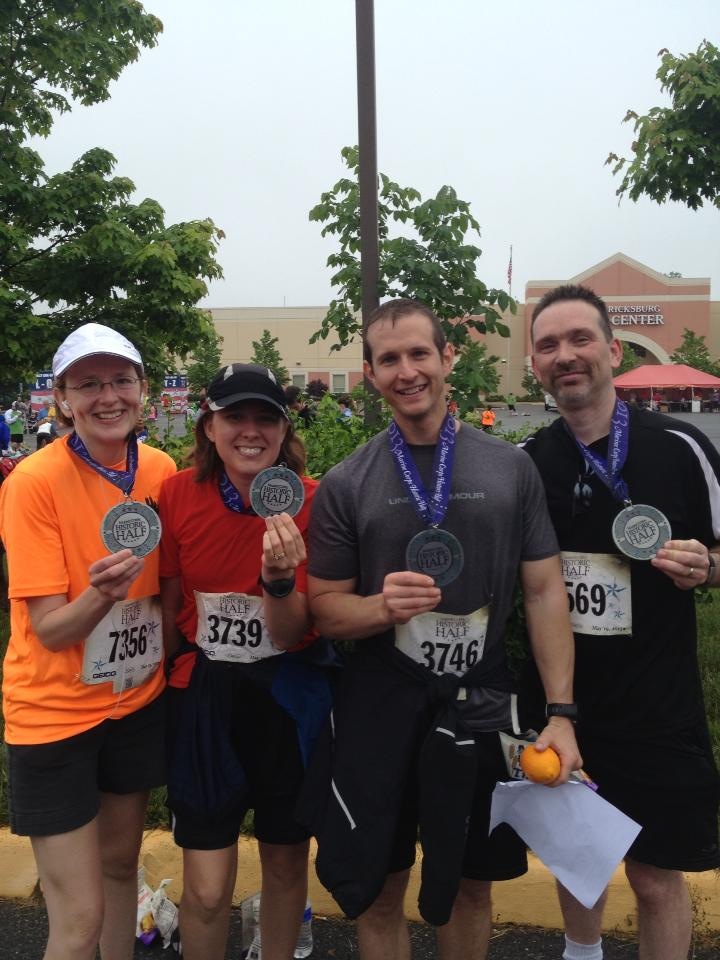
Actual: Yet with training and perserverance, I did it! I ran a the Marine Corps Half Marathon in Fredericksburg, VA on May 19th. And I think I’ll do another one someday, when my toenails grow back. |
37) Wildcard #2: Send a Letter to My Address in England
|
Plan: There’s a house with the same number and odd street spelling as ours in Alabama, but it’s in England. The plan was to send a letter or package to them. |
Actual: It simply never happened. I thought about it a few times, especially as Christmas rolled around. But we never did it. |
38) Wildcard #3: Make My Military Shadowbox
|
Plan: I have never displayed my military gear, and I want to have something so my kids understand military service better. I grew up in it, they have never seen me in uniform except in pictures. |
Actual: I have the frame and found a bunch of my old things, but never really got the project going. I will, but can’t call this one complete. |
39) Wildcard #4: Play Lasertag
|
Plan: I never defined this one through the year, so I’m thinking back to a birthday party we went to at a bowling alley. |
Actual: And at that party I finally played laser tag. I always wanted to as a kid, but never did. I’m not sure why, because it was a lot of fun and a great workout. I’m cheating a bit by claiming it now, but why not? |
40) Wildcard #5
|
Plan: Never defined |
Actual: Goals that are never defined cannot be accomplished. I left room for wildcards, but should have set deadlines to nail them down. Lesson learned. |
Final Thoughts
That’s a record of 22-14-4. A winning record, but I factor in a few other things to call this a successful experiment and a great year:
- I didn’t take it easy. These were ambitious goals that required extensive effort.
- My failures were rarely complete and utter failures. I came close and I did amazing things, even when I came up short of the goal.
Bottom line: I had an awesome year! I hope you attempt something similar and experience the joy I have over the course of the last 12 months.
Please use the comments below if you have any questions, or would like to share links to your adventure lists. Have fun and go live great lives!